
Choosing between owning and renting forklifts sounds like a straightforward cost comparison. In practice, it’s a strategic decision that touches everything from uptime and compliance to cash flow and the way your operation flexes during peak demand. If you’ve ever found yourself asking, “Are we paying too much to rent?” or “Will buying lock us into the wrong fleet?”, you’re not alone.
Below is a practical framework to help you decide—with the nuances that tend to get missed when the conversation stays at the headline price per week.
Start With Utilisation: How Many Hours Will It Truly Work?
The biggest driver of value is utilisation. A forklift that’s moving pallets all day, every day, is a very different asset from one that’s used for a couple of hours each morning.
High utilisation usually favours ownership
If a truck is consistently in use (think: core warehouse counterbalance trucks, main reach trucks, busy loading bays), ownership often becomes more economical over the life of the machine—provided you manage maintenance properly and your requirements are stable.
Variable utilisation often favours rental
If your need spikes seasonally or you’re supporting project-based work (fit-outs, temporary storage, contract logistics), rental can be the smarter hedge. You’re paying for availability without carrying the asset when it sits idle.
A quick reality-check question: are you renting because you need a forklift, or because you need a forklift right now? Speed and flexibility have value, and rental packages are built around that.
Look Beyond the Rate Card: Total Cost of Ownership vs Total Cost of Use
Comparing a rental quote to a purchase price is like comparing a hotel nightly rate to the cost of buying a house. The real comparison is total cost over time.
What ownership really includes
Owning typically means:
- Capital outlay (or finance costs)
- Planned servicing and breakdown repairs
- Tyres, forks, chains, hydraulics wear items
- Thorough examinations and compliance checks (in the UK, you’ll be thinking about LOLER and PUWER obligations)
- Operator damage and the cost of downtime when a truck is off the floor
- Disposal value at end of life (which can be meaningful if you buy well)
Rental can bundle some of these, but not always all. It’s worth reading the fine print: does the agreement include breakdown cover? What response time is guaranteed? Are tyres included? What counts as “fair wear and tear”?
Around this point, many operations start considering a hybrid approach: own the core fleet and rent for peaks. If you’re leaning toward buying for that core fleet and want a sense of what’s available in the market, you can check out forklifts currently in stock to benchmark typical models and specs against what your site actually needs.
Cash Flow, Risk, and the Operational “What If?”
Forklifts are productive assets, but they’re also mechanical systems that live hard lives. The right choice often comes down to how you want to allocate risk.
Ownership: more control, more exposure
When you own:
- You control the spec, attachments, and condition standards.
- You can standardise the fleet (which simplifies training, parts, and operator familiarity).
- You also carry the risk of major repairs, unexpected downtime, and residual value fluctuations.
Ownership tends to reward organisations with strong maintenance disciplines—whether in-house technicians or a reliable service partner—and stable operating conditions.
Rental: less risk, more flexibility
Rental shifts more risk away from you:
- Easier fleet scaling during peak periods
- Faster replacement if a unit becomes unreliable (depending on contract terms)
- Less worry about disposal or depreciation
The trade-off is that you may have less control over exact model consistency and you might pay more per hour worked over the long run—especially for always-on trucks.
The Spec Matters More Than People Think
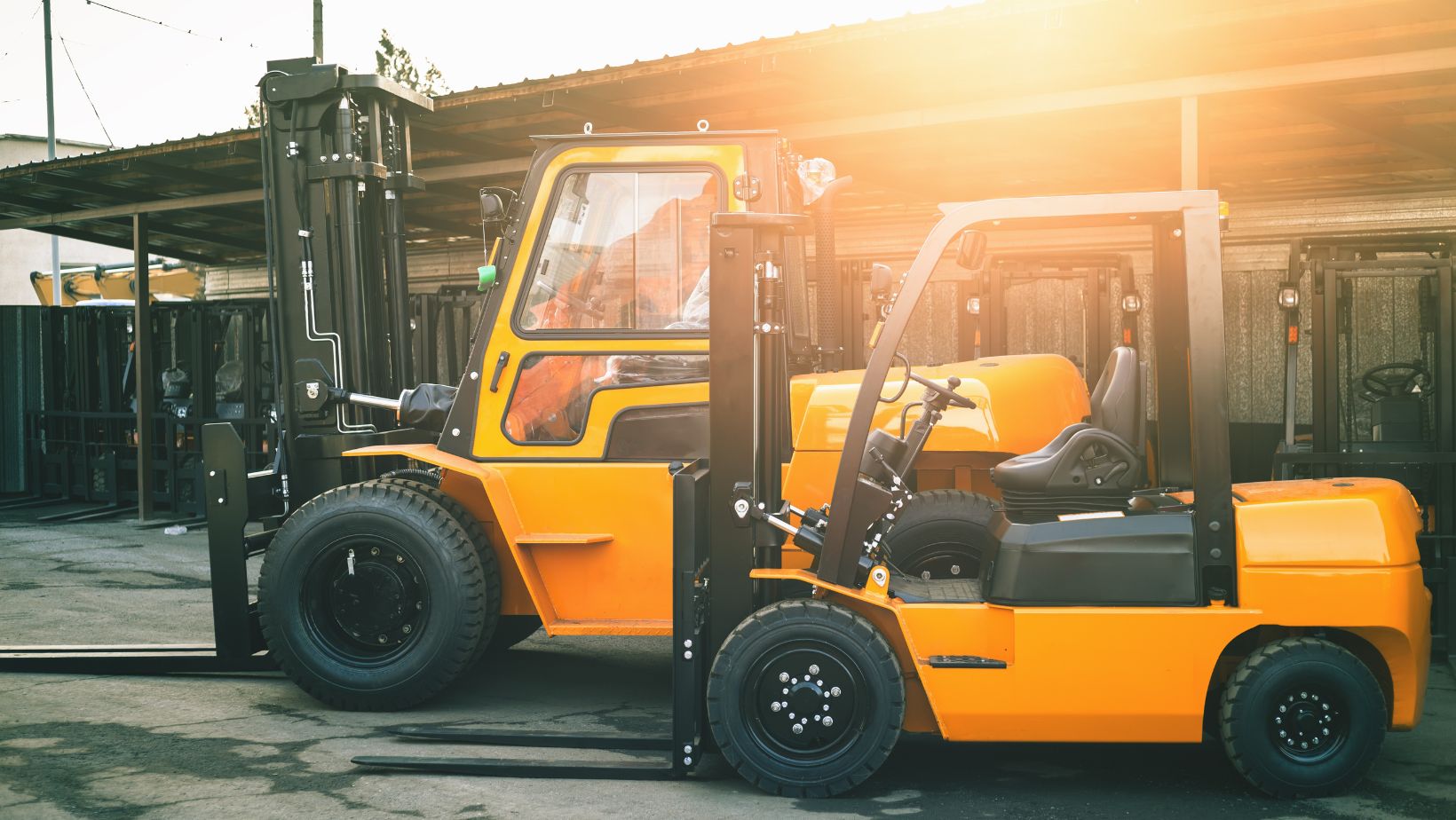
A forklift decision isn’t just “buy vs rent”—it’s also “which truck, which power source, which duty cycle.”
Electric vs diesel vs LPG: operational fit first
- Electric is often ideal indoors, with predictable shifts and good charging infrastructure. Battery management (charging windows, battery age, spare batteries) becomes a real operational variable.
- Diesel suits heavier outdoor work and rougher ground, but emissions policies and indoor restrictions can limit where it’s viable.
- LPG can be a flexible middle ground for mixed indoor/outdoor use, depending on site rules.
If your operation is evolving—new racking, different pallet types, higher lift heights—renting can buy you learning time. It’s expensive to discover six months after purchase that you actually needed a different mast height, a sideshift, or a narrower aisle truck.
The Hidden Cost: Downtime and Response Times
A forklift’s cost isn’t just financial; it’s operational. If one truck going down stalls picking or blocks a loading bay, the “real” cost can dwarf the rental rate.
Questions to ask yourself (and any supplier)
Here’s a short checklist you can use to pressure-test either route:
- What’s the acceptable downtime per truck per month?
- Do you have backup capacity if a key unit fails?
- How quickly can repairs be attended—and is that guaranteed?
- Are critical parts readily available for your chosen make/model?
- Is operator damage frequent enough that you need higher resilience (or better training)?
That’s the only bullet list you need. The answers usually make the choice obvious.
A Practical Decision Framework (With Real-World Scenarios)
When ownership tends to win
Ownership is often a strong fit when:
- The truck is essential and used daily
- Your layout and throughput are stable
- You have (or can access) reliable maintenance support
- You want consistent fleet standardisation
- You’re planning across a multi-year horizon
Example: A regional distribution centre running two shifts with consistent pallet profiles and fixed racking heights. Standardising on a known reach truck spec can reduce operator variability and maintenance complexity.
When rental tends to win
Rental is often the better option when:
- Demand is seasonal or contract-based
- You’re testing a new site, new product mix, or new layout
- You need rapid deployment
- You want to avoid tying up capital
- You value “swap-out” flexibility
Example: A food and beverage operation that spikes during summer, needing extra counterbalance trucks for yard movements and loading, then drops back to baseline.
When a hybrid approach is the most mature answer
Many well-run operations do this:
- Own the core fleet that runs every day
- Rent the surge capacity and specialist attachments (or unusual lift requirements)
This keeps long-term costs sensible without sacrificing agility.
Bottom Line: Optimise for the Operation You’ll Have Next Year
The best forklift strategy isn’t purely about today’s costs; it’s about resilience and fit. If your workflow is predictable, your trucks are heavily utilised, and you can manage maintenance, ownership often delivers stronger value. If your workload fluctuates, your requirements are still settling, or capital is better deployed elsewhere, rental can be a smart operational lever.
Treat the decision like you would any critical piece of infrastructure: map utilisation, quantify downtime impact, scrutinise what’s included in service terms, and choose the mix that keeps your operation moving—quietly, reliably, and without nasty surprises.