
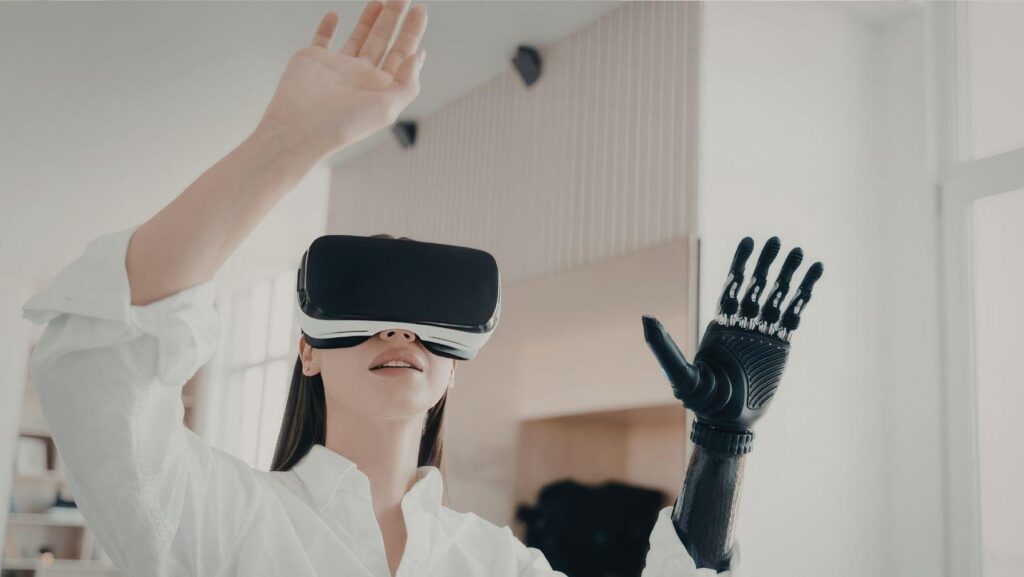
Meta Connect returns on September 23 and 24, and this year it’s not just another glasses teaser buried between developer keynotes. According to Road to VR, the event is being framed around wearables, mixed reality, and AI in a way that suggests Meta wants hardware headlines, not just software patch notes. For anyone who’s spent the last two years watching Quest updates roll out in small, incremental steps, that’s a shift worth paying attention to.
Hand-tracking has quietly become the thing VR developers argue about most. Not graphics. Not resolution. Whether your hands feel like your hands when you reach for something in a headset. Get it wrong and the whole illusion falls apart in about half a second. Get it right and suddenly every interaction, picking something up, gesturing, pointing, feels less like operating a device and more like just doing the thing.
That’s the real story behind Connect 2026, and it’s why developers building anything interactive, from productivity tools to full simulation environments, should be watching the announcements closely rather than waiting for the recap articles.
Why Hand-Tracking Is the Headline, Not the Footnote
UploadVR’s breakdown of what Connect 2026 might bring points to next-generation hardware that leans harder into passthrough and gesture precision than previous Quest generations. That matters because current hand-tracking, even on Quest 3, still fumbles fine motor tasks. Try typing on a virtual keyboard for more than a minute. It’s fine. It’s not good.
Meta has been unusually quiet about its actual headset roadmap this year. T3 reported that the company is building multiple next-generation headsets but has deliberately held back details, which reads less like nothing’s ready and more like they’re timing the reveal for maximum Connect impact.
Here’s where this gets interesting for developers outside pure gaming. Mixed reality passthrough combined with reliable hand-tracking opens up interaction models that flat-screen software simply can’t replicate. Card games, tabletop simulations, anything that depends on physical manipulation of small objects, all of it becomes viable in a way it wasn’t with Quest 2’s laggy tracking.
Regulated, licensed industries tend to be the first to pilot expensive new interaction hardware because they already have the compliance infrastructure and the customer base willing to try something new. Licensed online casino markets are a good example. Operators in states with mature regulatory frameworks are already experimenting with immersive live-dealer formats, and better hand-tracking is the missing piece that makes a virtual card table feel like an actual card table instead of a menu with extra steps. Ohio’s online casino market, one of the more recently regulated environments in the US, is a case where a reader curious about which licensed platforms are already leaning into richer digital experiences can see the full list and get a sense of how fast that regulated space moves once new tech becomes viable.
Worth flagging here too: none of this changes the basic math of gambling. If you’re exploring any regulated platform, only wager what you can afford to lose, and lean on resources like BeGambleAware.org if it stops feeling like entertainment.
The Hardware Ecosystem Isn’t Just Meta
Meta doesn’t get to have this moment alone. VR.org’s tracking of 2026 headset releases shows a genuinely crowded field right now, with Valve’s Steam Frame headset also expected to land this season. That’s unusual. For years Meta had the consumer VR market mostly to itself, competing more with its own previous headset generation than with rivals.
A crowded hardware season is good news for developers, even if it complicates their roadmaps. Competition forces faster iteration on the boring stuff nobody tweets about: latency, comfort, battery life, tracking drift over long sessions. Steam Frame reportedly leans on PC-tethered horsepower rather than standalone mobile chips, which means it can push more demanding rendering without melting a battery in forty minutes.
Two different approaches to the same problem. Meta bets on standalone convenience. Valve bets on raw power through a tether. Developers building for both will need to think in tiers again, the way PC gaming has always required scalable settings for a ten-year-old GPU and a five-month-old one.
What This Actually Means If You Build Software for Headsets
Say a Connect 2026 headset ships with genuinely reliable finger-level tracking, sub-20-millisecond latency, and passthrough clear enough to read text on a real desk through the lens. That’s not a marginal spec bump. That changes what’s buildable.
Small teams that couldn’t justify VR development because gesture tracking was too unreliable now have a reason to reconsider. Productivity tools. Training simulations. Collaborative design software where two people manipulate the same 3D object from different rooms. None of that works if your hand model jitters every time you make a fist.
There’s a catch, though, and it’s one that gets glossed over in the hype cycle. New hardware capability doesn’t automatically mean developers rebuild for it fast. Porting existing interaction logic to a new tracking model takes real engineering time, and most studios are still finishing whatever they committed to eighteen months ago. Expect a lag of one to two years between hardware capability and software that actually uses it well. That’s roughly what happened with Quest 3’s improved passthrough, which shipped in late 2023 and didn’t see widespread creative use until well into 2025.
Steam Frame and the Two-Headset Future
It’s worth sitting with the fact that developers may soon be optimizing for two fundamentally different hardware philosophies at once. Standalone convenience versus tethered power isn’t a new debate in gaming generally, console versus PC has run this argument for two decades, but VR hasn’t had to grapple with it seriously until now.
That split changes budgeting decisions too. A studio building for Meta’s standalone ecosystem needs to profile aggressively for mobile chipsets. A studio building for Steam Frame can lean on a connected PC’s GPU. Same target audience, wildly different technical constraints.
FAQ
When is Meta Connect 2026 happening? Meta Connect 2026 runs September 23 and 24, confirmed by Meta and covered by outlets tracking the announcement closely. The event traditionally combines developer-focused sessions with consumer hardware reveals, and this year’s framing suggests hardware will get more stage time than usual.
Will Meta announce a new Quest headset at Connect 2026? Meta has stayed unusually quiet on specifics, though reporting suggests multiple next-generation headsets are in development. Analysts expect at least a partial reveal or roadmap tease, even if a full consumer launch doesn’t happen the same week.
How does hand-tracking actually improve VR experiences? Better hand-tracking reduces latency and jitter when your fingers manipulate virtual objects, which makes fine motor tasks like typing, card handling, or precise pointing feel natural instead of frustrating. Current-generation tracking still struggles with these small, fast movements.
Is Valve’s Steam Frame a direct competitor to Meta’s headsets? It competes for the same developer and consumer attention, but the hardware philosophy differs. Steam Frame reportedly relies on a tethered PC connection for processing power, while Meta’s Quest line prioritizes standalone, mobile-chip convenience.
Why does regulated software (like licensed gaming platforms) adopt new VR hardware early? Regulated industries already maintain compliance and identity-verification infrastructure, which lowers the barrier to piloting new interaction tech. That’s why licensed markets often experiment with immersive formats before mainstream consumer apps catch up.
Connect 2026 is shaping up to be less about a single flashy headset and more about which interaction model wins the next few years. Whoever nails hand-tracking without sacrificing comfort sets the baseline everyone else has to match. Watch this space over the next month. It’s going to move fast.